

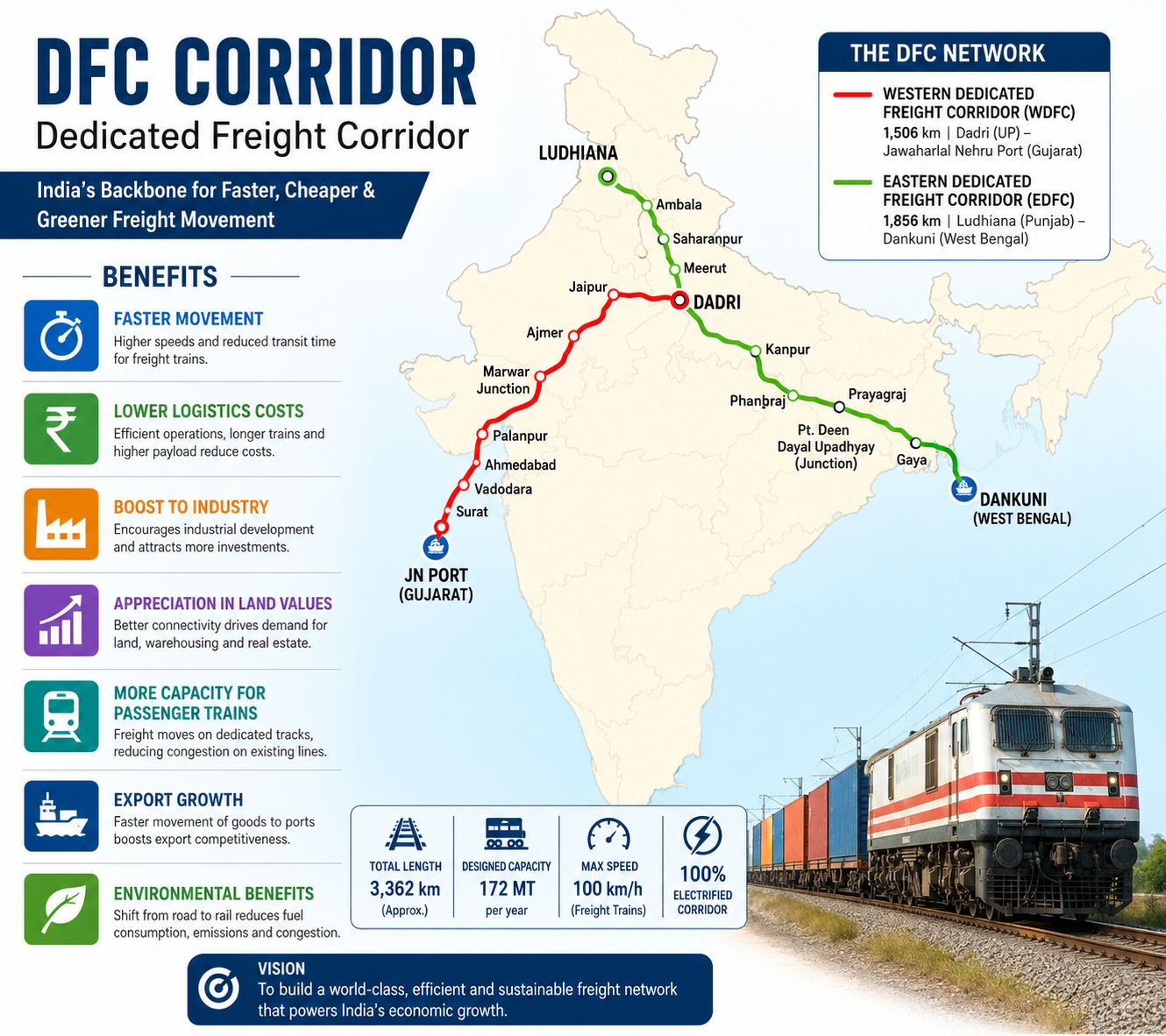
The Dedicated Freight Corridor (DFC) is one of India's most important infrastructure projects, designed exclusively for freight trains. It separates cargo movement from passenger rail traffic, making logistics faster, cheaper, and more efficient.
1. Faster Movement of Goods
Freight trains can run at much higher average speeds.
Transit times between manufacturing hubs, ports, and consumption centers are significantly reduced.
Businesses can maintain lower inventory levels and improve supply chain efficiency.
2. Lower Logistics Costs
India historically had logistics costs of around 13–15% of GDP.
DFCs help reduce transportation costs through longer trains, higher axle loads, electrification, and double-stack containers.
Lower logistics costs improve the competitiveness of Indian industries and exports.
3. Boost to Industrial Development
Industries prefer locations with efficient freight connectivity.
Warehousing, logistics parks, manufacturing units, and industrial clusters tend to develop along DFC routes.
Areas connected to DFCs attract higher private investment.
4. Appreciation in Land Values
For real estate investors, this is one of the biggest advantages:
Improved connectivity attracts industries and jobs.
Demand for residential, commercial, and warehousing land increases.
Locations near DFC junctions often witness faster land appreciation than surrounding areas.
5. More Capacity for Passenger Trains
Freight trains move to dedicated tracks.
Existing railway lines become less congested.
Passenger trains can run more frequently and with better punctuality.
6. Export Growth
The Western DFC connects northern manufacturing hubs to major ports.
Faster cargo movement improves export competitiveness.
Manufacturers can deliver goods to ports more reliably and at lower cost.
7. Environmental Benefits
Freight shifts from trucks to electrified rail.
Reduced fuel consumption and lower carbon emissions.
Less highway congestion and road wear.